Class overview
Ultra-long-range
The flagship class. Fly non-stop between nearly any two cities on earth, with a full cabin, a bedroom and a crew looking after you.

- Passengers
- 13–19
- Range
- 11,000–14,300 km
- Cruise speed
- ≈ 900 km/h
- Best for
- Non-stop between almost any two cities
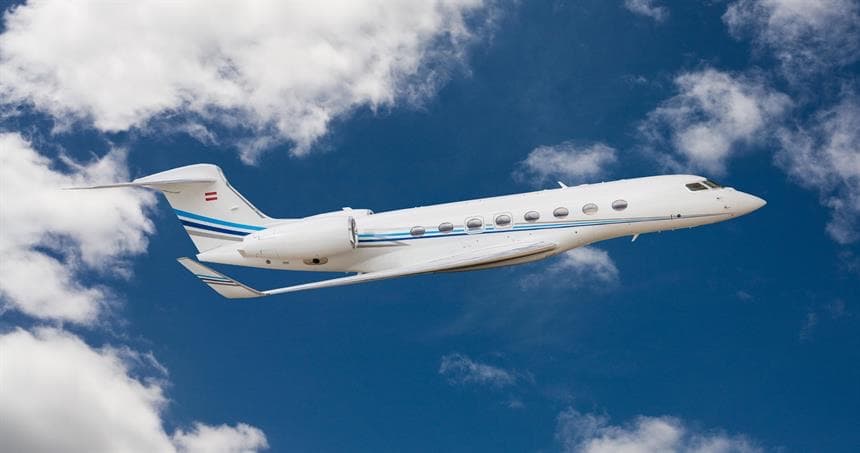
The flagship of private travel. An ultra-long-range jet like the Global 6000 crosses oceans non-stop — Europe to the Gulf, Asia or the Americas — with a full-size cabin, private rest area and everything needed to arrive rested.
We don’t own the jets — we source them. With access to 4,500+ aircraft, we pick the exact tail that fits your route, your group and your budget. These are estimated from-prices per flight hour, to give you a sense of cost. Your exact quote depends on the aircraft, route and dates — just ask.
The aircraft
Aircraft in this class
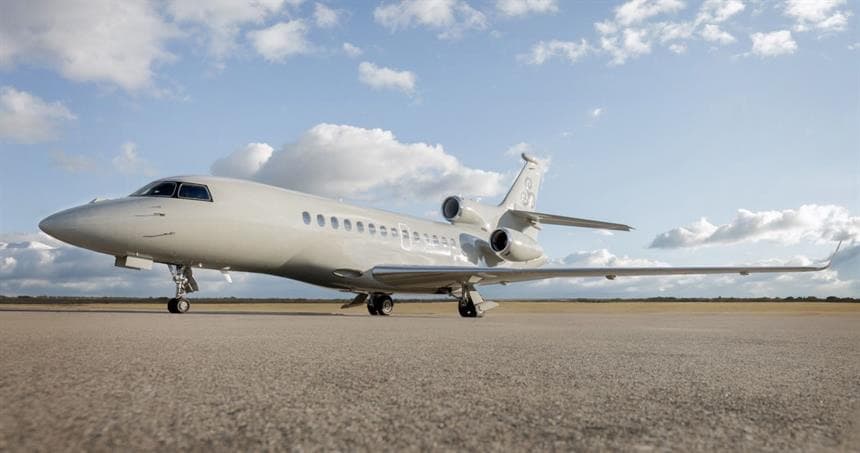
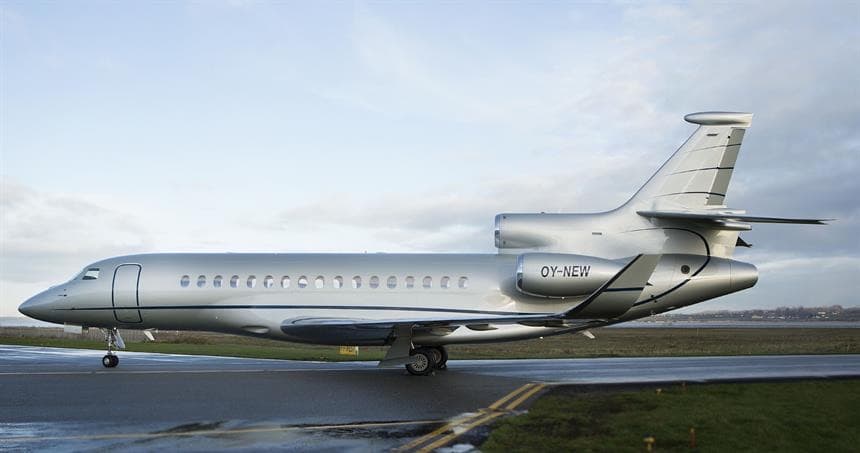
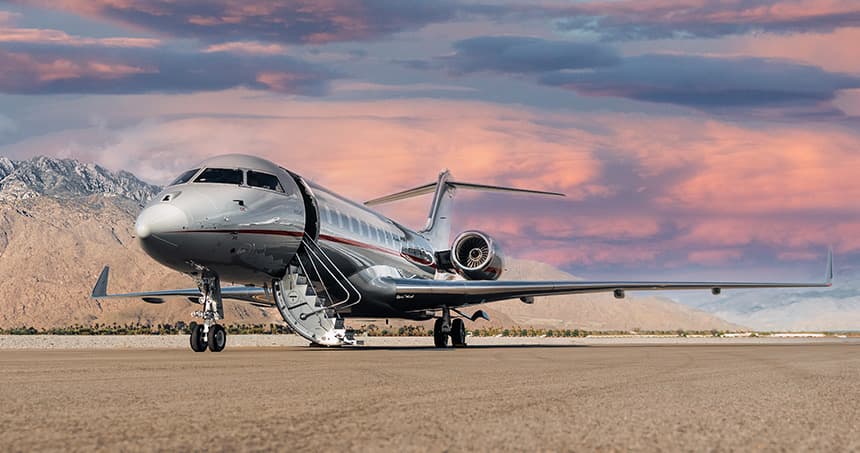
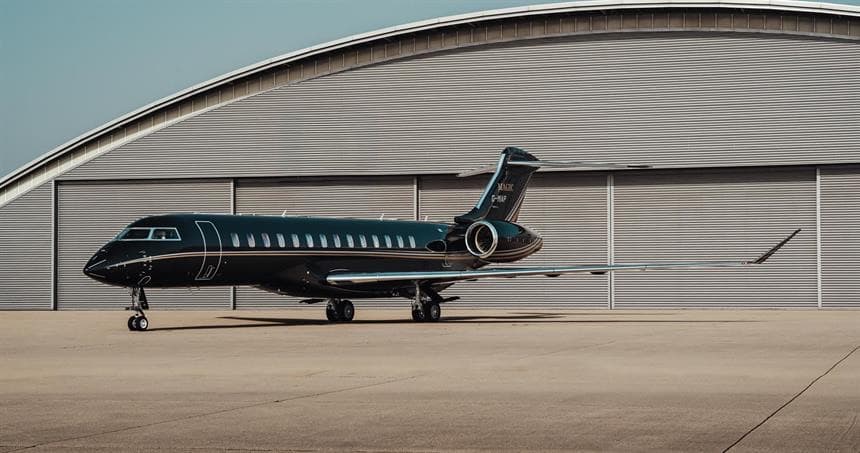
Pick a model to see its cabin, range and indicative hourly rate. We source the exact tail that fits your trip.
In detail
In practice
Ultra-long-range is the rung where the aircraft stops deciding the map. Eleven to fourteen thousand kilometres published, twelve to sixteen hours in the air, thirteen to nineteen seats, and cabins of 13 to 16.6 m laid out in three or four zones. The trade that defines the class is blunt: against a heavy jet you are buying distance and endurance, not cabin width. The five types here — Falcon 7X and 8X, Global 6000 and 7500, Gulfstream G650ER — differ from each other mainly in how much payload survives a full fuel load, which is the number this page is really about. From about €11,000 per flight hour. Avily Lux owns no aircraft; we charter through a large operator network and quote a named tail. Sold as long-range or ultra-long-haul jets too; what sets the class apart is range, not cabin size.
Who charters this class
A signing in Los Angeles on Monday morning with a Sunday evening departure from London, where the tech stop is the risk being paid to avoid. Nice–Tokyo or Nice–Hong Kong for a team who have to arrive able to work. London–Singapore for eight people with no interest in an hour on the ground in the Gulf at three in the morning. A family to the Maldives in one leg rather than two.
And, less glamorously, short European sectors. These aircraft live in Europe and reposition constantly, so London–Nice or London–Geneva on a Global surfaces as an empty leg at a fraction of the type's usual rate. A party of twelve with luggage does not fit in a light jet whatever the flight time, and the short hop is often the first leg of a trip that continues east later in the week on the same tail.
Against heavy jets and VIP airliners
Heavy jets start at about €7,500 an hour, this class at about €11,000. The €3,500 difference buys endurance and nonstop range — twelve to sixteen hours against eight — and cabin length. It does not buy width: 2.41 m across a Global 6000 and 2.44 m across a Global 7500 against 2.49 m in a Challenger 605. What it does buy inside is pressurisation and, on the newest types, a real bed. The Global 7500 holds a 2,900 ft cabin altitude at FL410, the G650ER 3,000 ft on the same basis, the Falcon 8X 3,900 ft; for the Challengers no manufacturer figure exists, so we publish none.
Above sits the VIP airliner at about €18,000, and that step buys floor area and nineteen seats rather than distance. A Boeing BBJ flies 11,100 km; a Global 7500 flies 14,260.
What the range band really means
11,000–14,300 km is published with eight passengers and four crew on NBAA reserves, and the payload arithmetic behind it deserves saying out loud. Gulfstream publishes a maximum payload with full fuel of 1,800 lb for the G650ER: eight people with light bags, which is exactly the basis of the 7,500 nm headline. Load fourteen with full baggage and about 1,300 lb of fuel comes off, costing 500–600 nm — roughly 12,800 km rather than 13,890. Seven thousand five hundred nautical miles and sixteen seats are not simultaneously true.
The same arithmetic runs milder elsewhere. The Global 6000 has around 1,000 kg of payload with full tanks, so thirteen aboard with bags costs 250–300 nm. The Global 7500 gives back a similar 400–600 nm and still outflies everything here. The Falcon 7X is the exception at roughly 1,700 kg — a full cabin barely moves its 11,000 km.
What moves the price
From about €11,000 per flight hour, and on a fourteen-hour sector every variable compounds.
Positioning. There are far fewer of these aircraft than heavy jets, and the ferry legs at both ends are yours. A Global 7500 in particular may be three hours away before your trip begins.
Crew. Past roughly twelve hours the sector needs an augmented flight crew and their rest, which moves both the price and sometimes the departure time. One or two cabin crew are standard.
Route costs. Overflight and navigation charges across a dozen flight information regions, handling and parking at both ends, de-icing in winter.
The airfield. A Global 6000 needs 1,974 m at maximum weight, a G650ER 1,920 m, a Falcon 7X 1,740 m. On a short, hot or high runway the field length picks the type, or the fuel load, and sometimes both.
Frequently asked questions
- Ultra-long-range or heavy jet?
- Distance decides it, because the cabins are comparable. If the trip is European, Gulf or transatlantic, a heavy jet does it from about €7,500 an hour and is no narrower inside. Pay the €11,000 when the sector is Los Angeles, Tokyo, Hong Kong or Singapore and the fuel stop is the thing you are buying your way out of.
- Can a G650ER fly 13,890 km with sixteen people on board?
- No. Gulfstream's published maximum payload with full fuel is 1,800 lb, which is eight passengers with light bags — the basis of the headline figure. With fourteen aboard and full baggage you give back roughly 500–600 nm, call it 12,800 km. That still beats everything in the class except a Global 7500, but it is not the brochure number.
- Is there a real bed and a shower?
- On a Global 7500, yes: a master suite with a full-size bed, and a stand-up shower on many airframes. Everywhere else in the class the bed is a converted divan, so four to six people lie flat and the rest recline. The G650ER, Global 6000, Falcon 7X and 8X have no shower. We confirm the layout on the tail, not on the type.
- Do we need a second crew on a fourteen-hour flight?
- Yes. Beyond about twelve hours the operator carries an augmented flight crew and has to give them rest in the air, which is what the crew rest area on these types is for. It shows in the quote, and occasionally in the departure time — we tell you which before you book rather than after.