Super-light jet
Pilatus PC-24
The go-anywhere jet
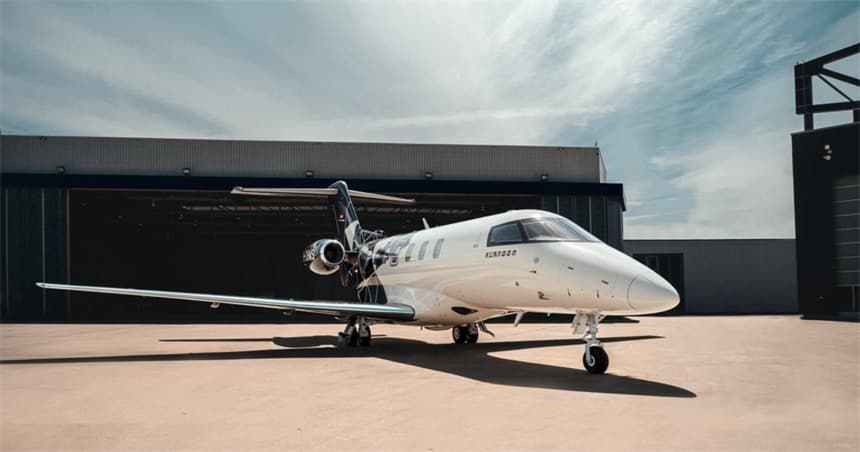
Estimated hourly rate — exact price on request.
- Passengers
- 8
- Range
- 3,700 km
- Cruise speed
- ≈ 815 km/h
- Max flight time
- ≈ 4.5 h
- Cabin length
- 7.01 m
- Cabin width
- 1.70 m
- Cabin height
- 1.55 m
- Aircraft length
- 16.81 m
Cruise speed is high-speed cruise. Manufacturers calculate range at the slower long-range cruise, with four passengers and NBAA IFR reserves — so a maximum-range leg takes longer than range ÷ speed, and a full cabin flies less far.
The Pilatus PC-24 is a unique 'super versatile jet' that pairs a spacious flat-floor cabin with the ability to use short and even unpaved runways. Seating up to eight, it opens up thousands of airports other jets can’t reach, without giving up comfort or speed.
We don’t own the jets — we source them. With access to 4,500+ aircraft, we pick the exact tail that fits your route, your group and your budget. These are estimated from-prices per flight hour, to give you a sense of cost. Your exact quote depends on the aircraft, route and dates — just ask.
In detail
The Pilatus PC-24 in practice
The PC-24 is the only jet in this fleet certified to operate from grass, gravel, wet earth and snow, and the only one with a cargo door. Everything else about it follows from those two facts. Eight seats, 3,700 km, around 815 km/h, 940 m to take off and 734 m to land, and a 2.50 m³ hold that sits inside the pressurised cabin behind a pallet-sized door. If your destination has a paved 1,800 m runway and your luggage is suitcases, you are paying from around €3,700 per flight hour for capability you will not use, and a Citation XLS+ or Phenom 300 is the better buy. If it does not, nothing else in this class goes. Avily does not own aircraft; we charter from operators across Europe, and the exact quote comes on request.
Where it came from
Pilatus showed the PC-24 at EBACE in Geneva on 21 May 2013, and the pitch was deliberately awkward: a jet that would keep the PC-12 turboprop's unpaved-runway access and its cargo door, then add jet speed and a pressurised jet cabin. Nobody else was building that. When the order book opened at EBACE the following year, the first 84 delivery positions went in 36 hours and Pilatus closed it again to protect the schedule.
P01 first flew from Buochs on 11 May 2015. EASA and the FAA certified the aircraft on 7 December 2017, and the first customer machine went to the American fractional operator PlaneSense on 7 February 2018. Steep-approach certification, London City included, followed in 2019.
The rough-field work arrived in stages. Dry sand and gravel were approved first; then in February 2020, after a campaign that took the aircraft onto grass at Goodwood, Duxford, Kunovice and Poitiers, wet dirt at Woodbridge and snow-covered gravel at Kuujjuaq in northern Quebec, Pilatus added grass, wet earth and snow-covered surfaces. The company's claim is access to roughly twice as many airports worldwide as a comparable business jet.
Maximum take-off weight has been raised since certification and now stands at 8,500 kg. Just over 200 aircraft had been delivered by 2024, and the line at Stans is still running.
Who charters a PC-24
Two groups book this aircraft. The first has a destination that other jets cannot reach: a strip in the Alps, an island field, a private grass runway, a mining or estate operation at the end of a gravel road. The second has cargo — ski and boot bags for eight, bikes, camera or medical equipment, a dog crate, a case that will not go through a normal baggage door.
If you are in neither group, the honest advice is to look at its neighbours. A Citation XLS+ gives you a 1.73 m cabin you can stand up in for less per hour. A Phenom 300 is quicker, loses less range with every seat sold, and costs less again. The PC-24's premium buys airport access and payload, not cabin size — and paying it for a Nice–London return with hand luggage is money spent on nothing.
Where it can land, and what that is worth
The numbers are 940 m to take off over a 50 ft obstacle at maximum weight and 734 m to land — the best field performance of anything in the light or super-light class. On paved runways that puts everything in Europe within reach: Cannes-Mandelieu and Sion are non-events, and Samedan at 1,800 m and 5,600 ft of elevation is close to a home airport for the type. It also holds steep-approach certification for London City, though the operator must hold the approval too, which we confirm on the specific aircraft before quoting.
The unpaved certification is the part no competitor has. Dry sand and gravel came first, then grass, wet earth and snow-covered surfaces in 2020, each with conditions on surface strength and contamination that the operator assesses for the actual strip. It is a real certification, not a marketing line — but it is not a blank cheque either. Send us the field and we will have it surveyed.
What 7.01 m of cabin actually measures
This is the number most often misread on the internet, so read it here first. The PC-24's published cabin length of 7.01 m runs from the cockpit divider to the aft bulkhead and includes the baggage zone at the back. Cessna and Embraer publish figures for the passenger section. So the PC-24 is not two metres more cabin than a Phenom 300 — the seating area is much closer than the table suggests, and comparing the two length figures directly compares different things.
What the flat floor genuinely gives you is width and usable shape: 1.70 m across, 1.55 m high, and no dropped aisle. Standing up is still out at 1.55 m, though it is the tallest cabin in the class after the XLS+. The lavatory is fully enclosed and externally serviced. Cabin altitude is 8,000 ft at 45,000 ft — comfortable, and behind the Phenom 300's 6,600 ft if long legs are your concern.
The hold, the payload and the range with a full cabin
The cargo door is the structural argument. It is roughly 1.25 m wide by 1.30 m high, opening into 2.50 m³ of heated, pressurised hold inside the cabin rather than an external locker. Skis, bikes and flight cases load flat and upright instead of being fed through a hatch. Commercial operators normally fit a net or curtain, so treat the hold as loaded before departure rather than accessible in flight.
Maximum payload is 1,406 kg, the highest in the class, but with full fuel about 600 kg is left — six adults with light bags. So a genuinely full eight-to-ten-seat cabin costs fuel, and the 3,700 km headline is a six-passenger figure that shortens from there. Realistic block times: London–Nice about 1h 45m, London–Geneva 1h 30m, Zurich–Nice about 1h 5m, Geneva–Ibiza 1h 35m, London–Barcelona 2h 10m, London–Ibiza 2h 35m. The practical ceiling is about 4.5 hours.
What moves the price
Charter starts from around €3,700 per flight hour, against roughly €3,600 for a Citation XLS+ and €3,500 for a Phenom 300 with the same seat count. The headline gap is small, and it is worth being clear about what it pays for: airports, payload and a door, not a bigger cabin.
The larger difference arrives through positioning. There are far fewer PC-24s on European charter fleets than Citations or Phenoms, so the nearest available tail may be a long way from your departure field, and that empty leg is on the quote. A same-day return often costs less than two one-ways for exactly this reason. Crew duty is the next lever — an early start with a late return can exceed one crew's legal day, and a second crew or a night stop changes the number. Then the calendar: Cannes in May, half-term in the Alps, August on the Riviera. Unpaved or short-strip destinations add a survey and sometimes a handling arrangement that a normal airport does not need. Every trip is quoted individually.
What it does well
- The only jet in this fleet certified for grass, gravel, wet earth and snow-covered runways, on top of full steep-approach certification for London City.
- A pallet-sized cargo door, roughly 1.25 m by 1.30 m, into a 2.50 m³ heated and pressurised hold inside the cabin.
- 940 m to take off at maximum weight and 734 m to land — the best field performance in the light and super-light classes.
- Maximum payload of 1,406 kg, the highest in the class, with a flat floor 1.70 m wide and no dropped aisle.
- Samedan, Sion and Cannes-Mandelieu are routine rather than marginal, which is not true of most jets of this size.
Where it gives ground
- A 1.55 m cabin: taller than a Phenom 300, but you still do not stand up, and the Citation XLS+'s 1.73 m does let you.
- The published 7.01 m cabin length includes the aft baggage zone, so it is not comparable with a Cessna or Embraer cabin figure — the seating section is far closer than the table implies.
- From around €3,700 per flight hour, more than an XLS+ or Phenom 300 for the same seat count. On a paved-runway trip with normal luggage you are paying for capability you will not use.
The Pilatus PC-24 against the alternatives
- Cessna Citation XLS+8 · 3,400 km
The better answer on a paved-runway trip where people will move about the cabin. Its 1.73 m ceiling is the only genuine stand-up height near this price, and it costs less per hour. You give up the cargo door, the unpaved certification and about 400 kg of payload.
- Embraer Phenom 3008 · 3,650 km
Pick it when the leg is long and the cabin is full. It gives up only around 300 km of range with every seat sold, cruises about 25 km/h faster, has a 6,600 ft cabin altitude and a lower hourly rate — as long as both runways are paved.
- Pilatus PC-126–8 · 3,340 km
Worth quoting when the strip is the whole problem and the leg is under about two hours. The same cargo door and rough-field philosophy in a single-engine turboprop, into shorter fields still, from around €2,300 an hour against €3,700. What you give up is nearly 300 km/h of cruise, so a two-hour jet leg becomes closer to three.
Routes the Pilatus PC-24 flies
- London → Nice1h 40mfrom €9,500
- London → Geneva1h 25mfrom €7,600
- Zurich → Nice1h 05mfrom €6,600
- Geneva → Ibiza1h 40mfrom €9,500
- London → Barcelona2h 10mfrom €11,000
- London → Ibiza2h 30mfrom €12,400
Flight times are typical for this type with a full cabin. Headwinds, payload and slot restrictions move them.
Pilatus PC-24 charter — frequently asked questions
- Can it really land on grass?
- Yes, with conditions. The PC-24 was certified for dry sand and gravel first, then in February 2020 for grass, wet earth and snow-covered surfaces after trials at Goodwood, Duxford, Poitiers, Woodbridge and Kuujjuaq. The certification carries limits on surface strength and contamination, so the operator assesses the actual strip before accepting the trip. Send us the field and we will have it checked.
- Will our skis, bikes and equipment fit?
- This is the aircraft designed for that question. The cargo door is about 1.25 m by 1.30 m and opens into a 2.50 m³ heated, pressurised hold inside the cabin, so long and awkward items load flat rather than being fed through an external hatch. Maximum payload is 1,406 kg. Send a list and we will confirm the loading plan with the operator.
- Is the cabin really 7.01 m long?
- That figure is real but it measures the whole flat-floor cabin from the cockpit divider to the aft bulkhead, including the baggage zone at the back. Cessna and Embraer publish the passenger section instead, so a direct comparison overstates the PC-24 considerably. What it genuinely wins on is width at 1.70 m, height at 1.55 m and a flat floor with no dropped aisle.
- Why is it more expensive than a Citation XLS+?
- Because you are buying airports and payload, not cabin. The XLS+ is wider inside, taller at 1.73 m and cheaper per hour, and on a paved-runway trip with suitcases it is the better value. The PC-24's premium covers unpaved certification, 940 m field performance, 1,406 kg of payload and the cargo door. If none of those are in your itinerary, book the XLS+.
Specifications
Full technical sheet
General
- Manufacturer
- Pilatus Aircraft
- Category
- Super-light jet
- ICAO designator
- PC24
- Production
- 2018–…
- Flight crew
- 1–2
Performance
- Range (IFR reserves)
- 3,700km
- Range (nautical miles)
- 2,000nm
- Ferry range
- 3,931km
- Cruise speed (high-speed)
- ≈ 815km/h
- Long-range cruise
- 689km/h
- Max operating Mach (MMO)
- M 0.74
- Max operating speed (VMO)
- 290KIAS
- Approach speed
- 98kts
- Takeoff distance (balanced field)
- 940m
- Landing distance
- 734m
- Service ceiling
- 45,000ft
- Cabin altitude
- 8,000ft
- Max flight time
- ≈ 4.5h
Powerplant and avionics
- Engine type
- Turbofan
- Engines
- 2 × Williams International FJ44-4A-QPM
- Thrust per engine
- 3,420lbf
- Avionics
- Pilatus Advanced Cockpit Environment (Honeywell Primus Epic 2.0)
Dimensions and capacity
- Aircraft length
- 16.81m
- Aircraft height
- 5.30m
- Wing span
- 17.00m
- Cabin length
- 7.01m
- Cabin width
- 1.70m
- Cabin height
- 1.55m
- Baggage volume
- 2.50m³
- Seats (charter layout)
- 8
- Seats (max certified)
- 10
- Suitcases
- 6
- Carry-on bags
- 3
- Max payload
- 1,406kg
- Max takeoff weight (MTOW)
- 8,500kg
- Max landing weight (MLW)
- 7,865kg
- Fuel capacity
- 3,369L
Manufacturer and type-certificate figures, verified field by field. A line we could not source is left out rather than filled with a plausible number.
Gallery