Class overview
Super-light jet
A step up from a light jet — more range, a taller cabin and a proper lavatory behind a door, without moving to a midsize hourly rate.

- Passengers
- 7–8
- Range
- 3,400–3,800 km
- Cruise speed
- ≈ 820 km/h
- Best for
- Longer regional trips with a taller cabin
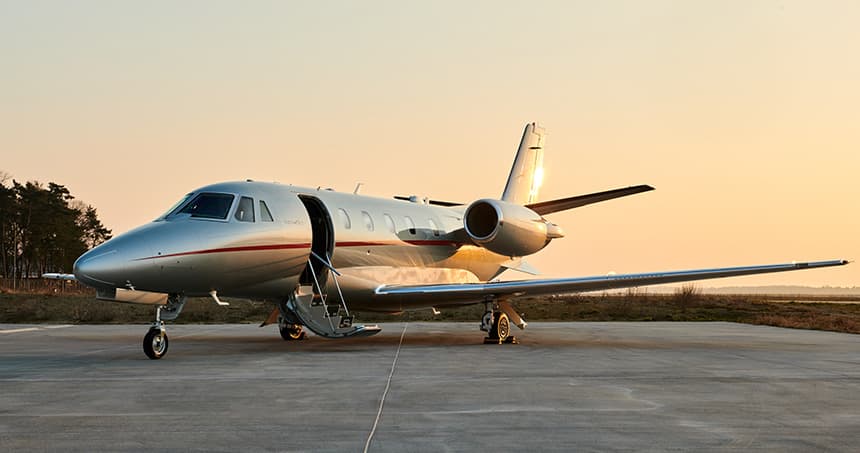
The sweet spot between light and midsize. A super-light jet like the Citation XLS+ seats up to eight in the tallest cabin below midsize and comfortably flies routes of up to four hours — London to Athens, Moscow to Nice — with luggage room for the whole group.
We don’t own the jets — we source them. With access to 4,500+ aircraft, we pick the exact tail that fits your route, your group and your budget. These are estimated from-prices per flight hour, to give you a sense of cost. Your exact quote depends on the aircraft, route and dates — just ask.
The aircraft
Aircraft in this class
Pick a model to see its cabin, range and indicative hourly rate. We source the exact tail that fits your trip.
In detail
In practice
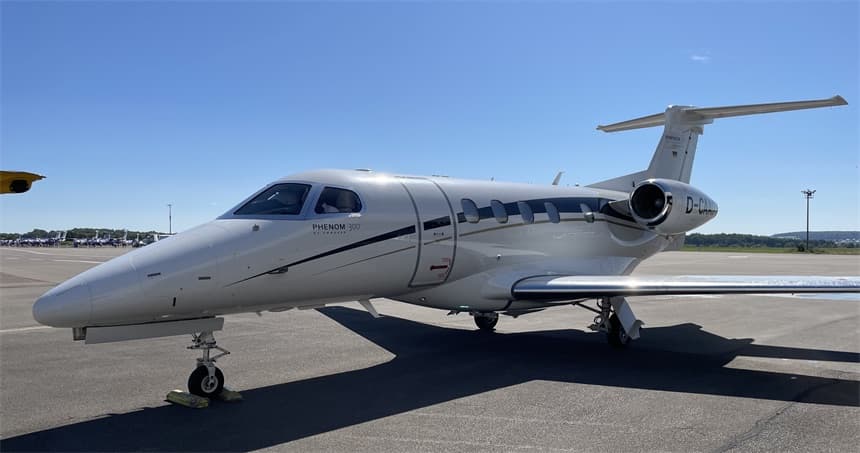
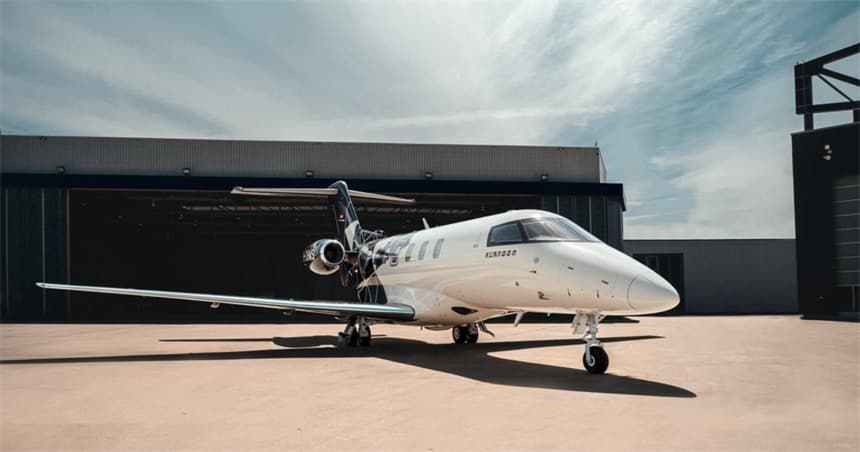
A super-light jet is the last rung before cabin size starts costing real money. Three aircraft carry the class in Europe: the Cessna Citation XLS+, the Embraer Phenom 300 and the Pilatus PC-24. Seven or eight seats, 3,400 to 3,800 km, around 820 km/h, and a hold that takes the whole group's luggage rather than a negotiated share. The trade that defines the class is height. What you buy is range, payload and airport access — not a cabin you can stand up in. The XLS+ at 1.73 m is the tallest cabin below midsize, and you walk it upright only if you are under about 5 ft 8 in. Charter starts from around €3,500 per flight hour. Avily owns no aircraft; we charter from operators across Europe. Some brokers write this as super mid-light, and some fold it into the light jet class altogether; when you compare quotes, compare the aircraft type rather than the label.
Who charters a super-light jet
The typical booking is five to eight people leaving Europe's north for its south and back within three days: a family to the Riviera in August, a group to the Alps in February with ski bags, a management team doing Milan, Munich and Zurich before Friday. Two to three and a half hours, seats full, luggage real.
What pushes those groups up from a light jet is rarely the flight time. It is the luggage that will not fit, the sixth and seventh passenger who turn a light jet into a fuel stop, or an airport that a heavier aircraft cannot use. The XLS+ carries 2.27 m³, the Phenom 300 2.38 m³, and the PC-24 loads 2.55 m³ through a pallet-sized cargo door. That is the difference people feel.
Against a light jet, and against a midsize
Light jets start at about €3,300 an hour, super-lights at about €3,500. Two hundred euros is the smallest step on the ladder and the best value on it. A Citation CJ2 or Hawker 400XP is a 2,400–3,000 km aircraft on paper, and a CJ2 with six adults and their bags is a 2,000 km aircraft in practice. The super-lights hold their range under load, and their holds are roughly a third larger.
Going the other way, midsize starts at about €4,000 — €500 more an hour — and buys 4,250 to 5,200 km and, on the Citation Latitude, the first flat-floor cabin on the ladder that an adult can stand up in at 1.83 m. If nothing on the trip exceeds four hours and nobody needs to stand, that €500 buys capability you will not use.
What 3,400 to 3,800 km really means
The band is a four-passenger figure with reserves, and its ends are not measured identically: Pilatus publishes 2,040 nm with four aboard and 2,000 nm with six, while Embraer's Phenom number counts five occupants. Treat the band as the aircraft nearly empty.
With every seat sold, plan differently. The XLS+ drops to about 2,850 km, the largest haircut in the class. The Phenom 300 gives up only around 300 km and holds about 3,350 km, the best full-load retention here by a wide margin. The PC-24 loses roughly 75 km between four passengers and six. So a full super-light is a 2,850–3,400 km aircraft: London to Athens or Marrakech, Geneva to Bodrum, Milan to Reykjavik. Beyond that the honest answer is a fuel stop or the class above.
What moves the price
Positioning first: aircraft are not parked where you want them, so the empty leg to reach you sits on the quote — which is why a same-day return often prices below two one-ways. Crew duty is next, since an early departure with a late return can exceed what one crew may legally fly. Then the calendar — Cannes in May, half-term in the Alps, August on the Riviera — and handling fees that vary more than people expect.
Inside this class the airport moves the price too. The PC-24 is the only jet here certified for grass, gravel, wet earth and snow, and it is the dearest of the three at €3,700. For London City the Phenom 300 and the PC-24 are certified steep-approach types and the XLS+ needs the modification on the specific airframe; in every case the operator must hold the approval, which we confirm per aircraft.
Frequently asked questions
- Can I stand up in a super-light jet?
- No. The Citation XLS+ at 1.73 m has the tallest cabin below midsize, and only passengers under about 5 ft 8 in walk it fully upright. The Pilatus PC-24 is 1.55 m and the Phenom 300 is 1.50 m. If standing matters more than range or price, the class to ask about is midsize.
- Super-light or midsize jet?
- Super-light from about €3,500 an hour covers up to roughly 3,400 km with the seats full. Midsize from about €4,000 covers 4,250 to 5,200 km and, on the Citation Latitude, adds a flat floor and a 1.83 m cabin. Under four hours with nobody standing, the extra €500 an hour buys nothing you will use.
- How far can eight of us fly with luggage?
- Between about 2,850 and 3,400 km depending on the aircraft — roughly London to Athens or Marrakech, Geneva to Bodrum, Milan to Reykjavik. The Phenom 300 holds its range best under a full load; the XLS+ gives up the most. Send us the passenger and luggage count and we quote the specific tail against your route.
- Which of these can use a short or unpaved runway?
- The Pilatus PC-24 is the only jet in the class certified for dry sand, gravel, grass, wet earth and snow, and it needs 942 m to take off over a 50 ft obstacle. The Citation XLS+ and Phenom 300 are paved-runway aircraft, though both are comfortable at Cannes-Mandelieu, Sion and Samedan.