Class overview
Heavy jet
Wide cabins with separate areas, full catering and the range for international travel with a larger party on board.

- Passengers
- 10–14
- Range
- 5,200–7,400 km
- Cruise speed
- ≈ 860 km/h
- Best for
- Intercontinental travel for larger groups
Space to truly relax on long flights. A heavy jet such as the Legacy 650 carries ten to fourteen guests with separate cabin zones, a galley and room to sleep — an excellent choice for a family holiday or a team flying long-haul in comfort.
We don’t own the jets — we source them. With access to 4,500+ aircraft, we pick the exact tail that fits your route, your group and your budget. These are estimated from-prices per flight hour, to give you a sense of cost. Your exact quote depends on the aircraft, route and dates — just ask.
The aircraft
Aircraft in this class
Pick a model to see its cabin, range and indicative hourly rate. We source the exact tail that fits your trip.
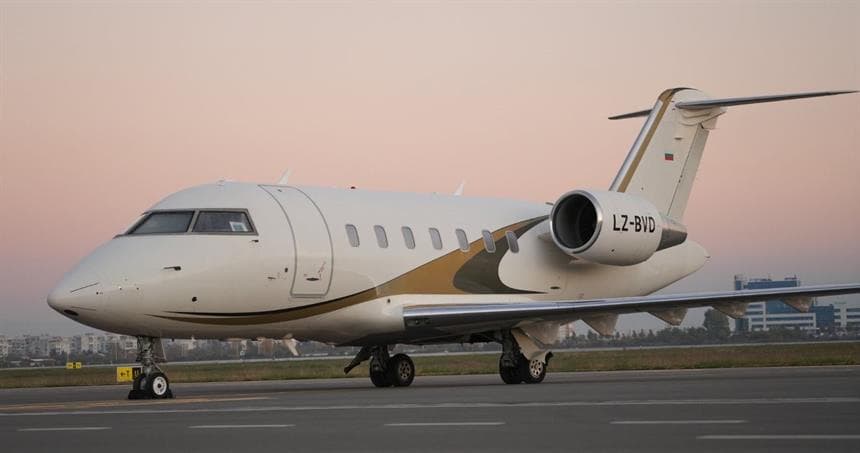
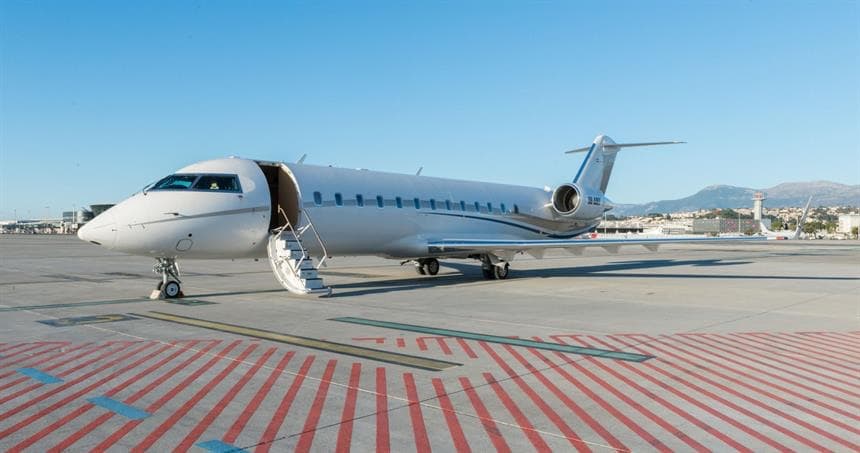
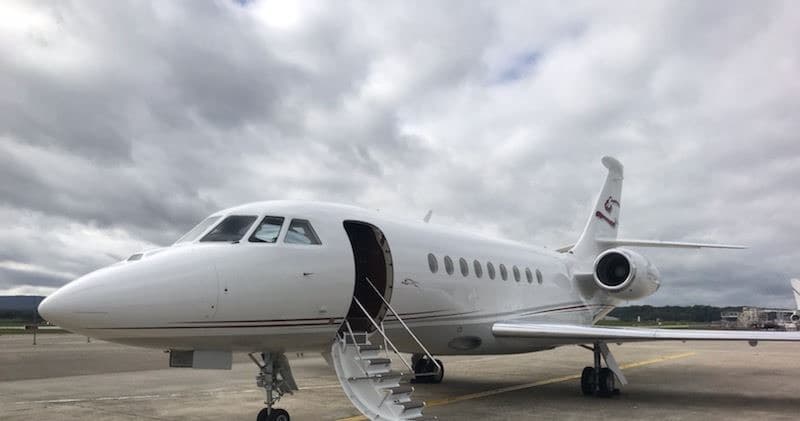
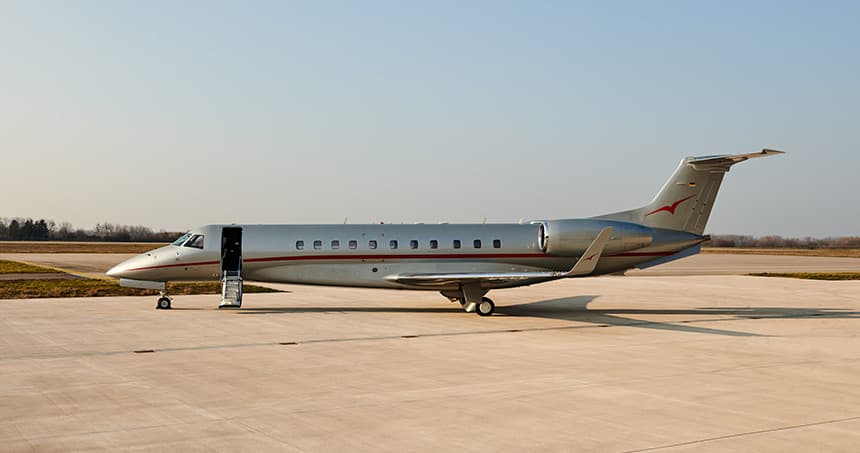
In detail
In practice
A heavy jet is the first rung where the cabin becomes a room. Ten to fourteen seats, a flat floor you walk down at full height, separate zones, a full galley and a lavatory behind a door — on the Challenger 850, two of them. The class is sorted by what you sit in, not by how far it goes, which is why the range band runs from 5,200 to 7,400 km instead of clustering: the Challenger 850 trades range for the largest cabin in the class, while the Falcon 2000LXS, Challenger 605 and Legacy 650 cross the Atlantic. From about €7,500 per flight hour. Avily Lux owns no aircraft; we charter these types through operators across Europe and the Gulf, and we name the tail we are quoting. Most of the market calls this class a large jet or a large-cabin jet: heavy jet charter, large jet charter and large-cabin charter all describe what is on this page.
Who charters a heavy jet
A board of ten flying London–Dubai for two days of meetings, where the alternative is two smaller jets and a party split across them. A family of twelve to Larnaca in August with the luggage three generations bring. A production unit with two dozen cases — the Legacy 650 carries 8.1 m³ of them and lets you reach the hold in flight. A ski group in February whose equipment picks the aircraft before anything else does.
The common thread is group size plus a sector long enough that people need to stand up, eat and work. Below eight passengers a super-midsize jet does the same trip for less money and gets into more airports. Beyond about 7,000 km with every seat sold, the class runs out and the answer is an ultra-long-range jet.
Against super-midsize and ultra-long-range
Super-midsize starts at about €5,800 an hour, heavy at about €7,500. That €1,700 buys two to five seats, 30 cm of cabin width — 2.49 m across a Challenger 605 against 2.19 m in a Challenger 350 — a second cabin zone, a bigger galley and enough hold to stop counting bags. It does not buy speed: ≈860 km/h here against ≈850 below.
The step up costs more than twice as much again. Ultra-long-range starts at about €11,000, and that €3,500 an hour buys distance, not room. A Global 6000's cabin is 2.41 m wide and 1.88 m high; a Challenger 605's is 2.49 m and 1.85 m, and a Challenger 850's is longer than either at 14.76 m. You move up a rung when the map demands it, not when the cabin does.
What 5,200 to 7,400 km really means
The band is measured with a light cabin and reserves, and manufacturers do not use the same basis. The Challenger 605's 7,400 km is a six-passenger figure; with ten to twelve aboard, plan on about 6,950 km. The Legacy 650's 7,200 km is a four-passenger figure and falls to roughly 6,780 km with thirteen. The Falcon 2000LXS is the straight one — its 7,400 km is already quoted at eight passengers.
The floor of the band is a deliberate design choice, not a weak aircraft. The Challenger 850 is a converted CRJ200 regional airliner: 5,200 km published, 4,600–5,000 km with fourteen aboard, three zones, two lavatories and more cabin volume than a Global 6000. Every Europe–US sector on it carries a fuel stop. The other three fly London–New York with everyone on board.
What moves the price
From about €7,500 per flight hour, and the hourly rate is the smaller half of the answer.
Positioning. If the nearest free aircraft is in Vienna and you leave from Luton, the empty legs at both ends are on your quote. The Challenger 605 is the most numerous type here, so those legs are usually short.
Crew duty. A Gulf sector with a same-day return breaks duty limits, so the operator night-stops the crew or carries a second one. A flight attendant is standard at this cabin size and is in the price either way.
The airport. The Falcon 2000LXS needs about 1,425 m of balanced field, the Challenger 605 about 1,780 m and the Challenger 850 about 1,922 m — a short, hot or alpine strip picks the type for you. In Cannes in May or Ibiza in August, the slot and the parking are the hard part, not the jet.
Frequently asked questions
- Heavy jet or super-midsize jet?
- Take the super-midsize if the party is eight or fewer and the trip stays inside Europe: it flies the same sectors from about €5,800 an hour against €7,500. Move up when there are ten of you, when the cabin has to hold a meeting and a bed at the same time, or when you want New York nonstop with every seat sold.
- Does a heavy jet cross the Atlantic nonstop with a full cabin?
- Three of the four do. A Challenger 605 with twelve aboard still has about 3,750 nm and London–New York is around 3,000, so it fits. Winter westbound headwinds can cost 10–15%, and on those days the crew keeps a Shannon or Gander stop as a contingency. The Falcon 2000LXS and Legacy 650 behave similarly. The Challenger 850 always stops.
- Why does the band start at 5,200 km when a super-midsize jet flies further?
- Because the class is defined by cabin, not by distance. The Challenger 850 is a converted regional airliner with a 14.76 m cabin, three zones and two lavatories — bigger inside than a Global 6000 — and it pays for that volume in fuel. A Praetor 600 out-ranges it at 7,400 km and cannot seat fourteen or separate a meeting from a bedroom.
- Can everyone sleep flat on a heavy jet?
- No. Operators list five sleeping berths on a Challenger 605 and seven on a Challenger 850, all made from divans and converted seats; the Legacy 650 makes four singles and a double. None of these types has a shower or a dedicated crew rest area. On a night sector, plan for part of the group lying flat and the rest reclining.