Private jet route
Private jet charter from Nice to Madrid
Nice → Madrid
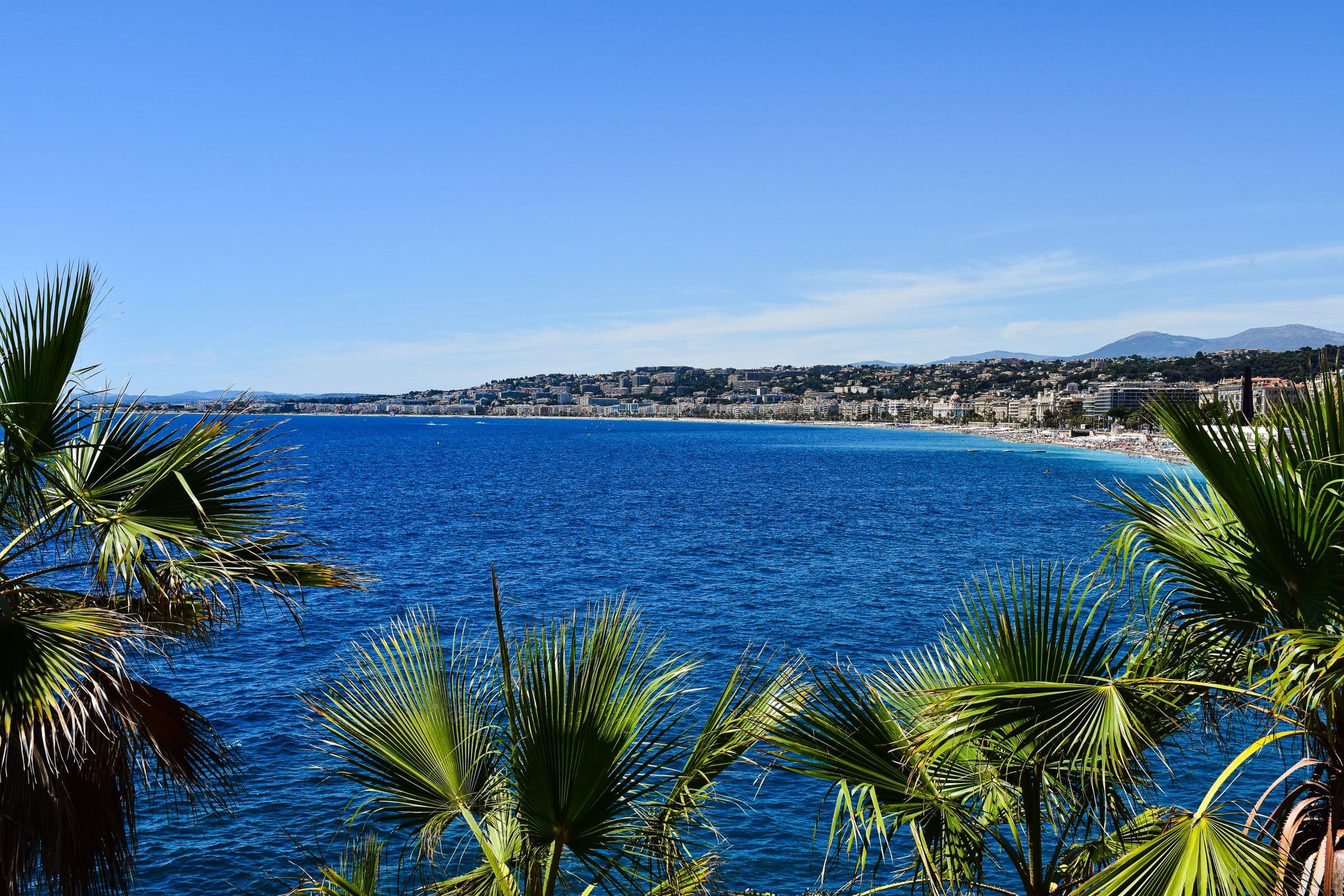 Nice
Nice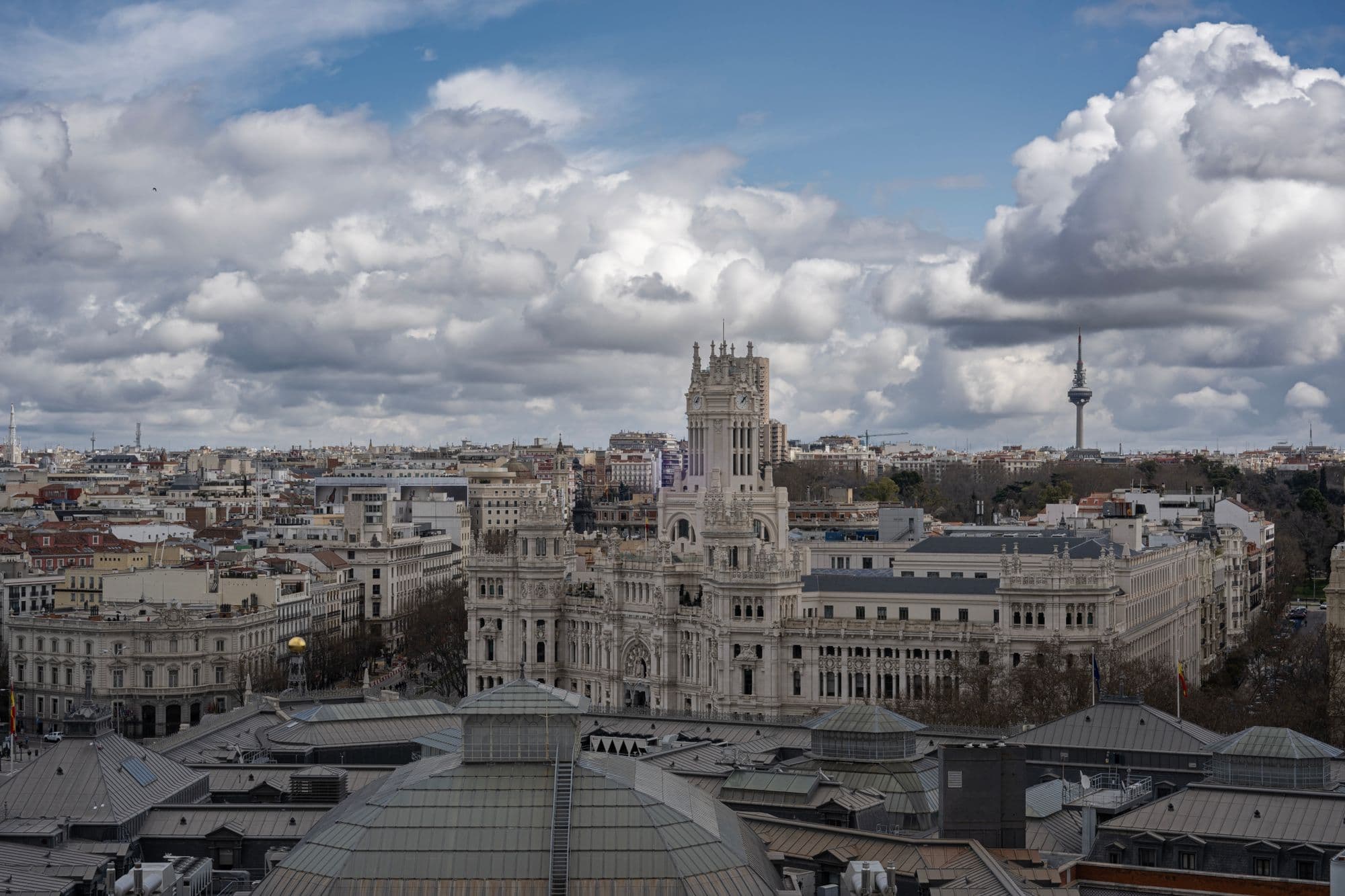 Madrid
An hour and fifty minutes across the Gulf of Lion and the width of Spain. It is a short flight between two places with almost nothing in common commercially, which is why the scheduled map serves it badly and why most of the traffic on it is private. It is also a corridor whose two ends run on opposite calendars: August is the Riviera at maximum and Madrid at minimum. From about €10,200 one way.
Departure airports · Nice
- NCE · Nice Côte d'Azur
- CEQ · Cannes–Mandelieu
Arrival airports · Madrid
- MAD · Madrid–Barajas
- LECU · Madrid–Cuatro Vientos
One hour fifty, and what the alternatives really cost
A private jet covers the 960 km from Nice to Madrid in about 1 hour 50 minutes. The alternatives are worse here than on any other corridor in this list. The road is roughly 1,300 km through Provence, Languedoc and Catalonia, which is a full day and then some. The railway involves France, a change and Spain, and takes most of a day. And the scheduled air link between the Côte d'Azur and Madrid is thin and seasonal, so a commercial trip frequently means connecting through Paris, Barcelona or Rome — a five to seven hour journey to cover a distance the jet does in under two. That imbalance is the whole argument for this route. On London–Madrid a private flight saves you a few hours of airport. On Nice–Madrid it often converts an overnight trip into a day trip, which is a different order of saving and the reason the corridor exists at all.
Nice, Cannes and the two Madrid fields
Nice Côte d'Azur is the departure airport for almost all of this traffic. It sits on the sea a few minutes from the city, has a business-aviation terminal of its own with its own customs post and parking for something like 120 business aircraft, and it runs 24 hours — with the qualification that the business apron's departure stands close between 23:00 and 06:00, so the airport being open and your aircraft being able to leave are not the same statement. It is also fully slot-coordinated, and business and general aviation are not exempt: the coordinator's authorisation number has to appear in the flight plan itself, and a plan filed without one can be suspended. That is one more reason a Nice departure is not a thing you arrange on the morning. Cannes–Mandelieu is the alternative when the Croisette is the address, and its rule is a weight rule rather than a preference: jets above 35 tonnes and turboprops above 22 tonnes are prohibited, and the aerodrome is closed at night — its last movement of the day falls between eight and ten in the evening depending on the season. Choosing Cannes and choosing your cabin are therefore the same decision. At the Madrid end, Barajas is 13 km north-east of the centre, has four runways up to 4,179 m and a dedicated executive terminal, and never closes. Cuatro Vientos is 8.5 km south-west and much quicker on the ground, and since both countries are in Schengen there is no border to make it awkward. Its published limits are what decide: visual flight rules only on a 1,500 m runway, no instrument approach at all, and hours that run from nine in the morning to sunset. On a summer afternoon arriving from Nice that can work. On a November evening it cannot.
What moves the price on Nice to Madrid
From about €10,200 one way, and unusually for this site's corridors it is the departure end that sets the number. Madrid is a steady, year-round business market with plenty of apron. Nice is a market with a season, and in that season everything on the Côte d'Azur is priced by scarcity — slots, handling, parking, crews. A Nice departure in the second half of May, in the Grand Prix week or across August costs what it costs because of what else is happening at Nice, not because of anything Madrid is doing. The scarcity is not a figure of speech. Through the summer peak the airport's coordinated capacity caps the busiest hours at thirty arrivals and thirty departures, and a business-aviation turnaround longer than four hours needs the airport's approval — which is the published mechanism behind the thing clients actually notice, that the aircraft which drops them often cannot simply wait. The other lever is which way the aircraft is facing. Most of the fleet that serves the Riviera comes down from the north and goes back to it, so an aircraft pointing west toward Spain is less common than one pointing north toward Paris or London. When you find one, the difference is material. Tell us at the enquiry whether your date can move by a day, because on this corridor that is the question that changes the answer.
Empty legs between Nice and Madrid
This is a thin vector for empty legs and it would be misleading to suggest otherwise. Empty legs come from corridors that run as shuttles, and the Riviera's shuttle runs north — to London, Paris, Geneva and Zurich — not west to Spain. An aircraft finishing a job in Nice is far more likely to be repositioning toward its northern base than toward Madrid. Where something does turn up, it is usually August, and usually in this direction rather than the reverse. In August the Côte d'Azur is full and Madrid is empty, so an operator with an aircraft stuck on the coast and a client waiting in Spain has a reason to move it west. Those are genuine and they are infrequent. Give us a two or three day window and we will watch for one; if nothing appears you get an ordinary quote and the waiting cost you nothing.
Which aircraft actually fly Nice to Madrid
960 km is comfortable for anything from a light jet upward with every seat sold, so this is a cabin decision. A Phenom 300 takes four to six with luggage. A Citation XLS+ is the smallest cabin here you can stand up in, and carries eight. A Challenger 350 is the answer for a larger group or for anyone who wants a flat floor and a proper lavatory on a sector approaching two hours, and it brings range this route has no use for. Two airports narrow that list rather than the distance. Cannes–Mandelieu, if that is your departure point, prohibits jets above 35 tonnes outright, which takes the heavy end off the table before anyone looks at a runway chart — so the aircraft and the airport get decided together, and if the answer has to be a Challenger-sized cabin the departure moves to Nice. At the Madrid end, Barajas sits at 609 m above sea level with summer afternoons well into the thirties, which lengthens the take-off run on the way home. On four runways between 3,500 m and 4,179 m that is arithmetic rather than a problem, but on a hot day with a full cabin it is the arithmetic that decides whether the return goes nonstop.
Two cities whose seasons are out of phase
Almost every other corridor on this site connects two places that are busy at the same time. This one does not, and the consequences are practical rather than decorative. In August the Riviera is at maximum: Nice is one of the busiest business-aviation airports in Europe, parking is the binding constraint, and an aircraft that drops you may well have to reposition rather than wait. Madrid in the same weeks is at its emptiest — the city closes for the summer, its own traffic falls away, and the coast and the Balearics take it. So an August trip in this direction has a difficult departure and an easy arrival: expect the Nice end to shape the price and the Madrid end to be simple, with parking available and a handler that is not rushed. October through to Easter inverts it. Madrid's trade-fair and corporate calendar fills up, the Riviera goes quiet, and the constraint moves to the Spanish end. The useful conclusion is that you only ever have one difficult end on this route, and knowing which one it is this month is most of the planning.
Typical aircraft
| Aircraft | Passengers | Range | Cruise speed |
|---|---|---|---|
| Embraer Phenom 300 | 8 | 3,650 km | ≈ 840 km/h |
| Cessna Citation XLS+ | 8 | 3,400 km | ≈ 815 km/h |
| Bombardier Challenger 350 | 9 | 5,900 km | ≈ 850 km/h |
Estimated one-way charter for the whole aircraft. The exact price depends on the aircraft and date, and is always quoted on request.
Frequently asked questions
- How long is a private flight from Nice to Madrid?
- About 1 hour 50 minutes over 960 km. The alternatives are poor: roughly 1,300 km by road, most of a day by train, and a commercial trip that usually means connecting through Paris, Barcelona or Rome. This route converts an overnight into a day trip.
- How much does a private jet from Nice to Madrid cost?
- From around €10,200 one way. Unusually, the departure end sets the number — Nice in season prices everything by scarcity, while Madrid has apron to spare. A date that can move by a day is the single biggest lever available here.
- Are there empty legs from Nice to Madrid?
- Few, and it is fairer to say so. The Riviera's repositioning flights run north to London, Paris and Geneva, not west to Spain. The exception is August, when aircraft stuck on a full coast have a reason to move to an empty Madrid. Give us a two or three day window.
- Can I fly from Cannes–Mandelieu to Madrid?
- Yes, on a smaller aircraft. Cannes–Mandelieu prohibits jets above 35 tonnes and turboprops above 22 tonnes, and it is closed at night, so choosing Cannes and choosing your cabin are the same decision rather than two. If the group needs a Challenger-sized cabin, or the departure is late, it moves along the coast to Nice Côte d'Azur.
- When is Nice to Madrid most expensive?
- The second half of May, around the Cannes Film Festival and the Monaco Grand Prix, and across August — all of which are set by what is happening at Nice rather than at Madrid. From October to Easter the pressure moves to the Spanish end and the Riviera goes quiet.
- Which Madrid airport do I land at from Nice?
- Barajas by default, 13 km from the centre and open around the clock. Cuatro Vientos is closer at 8.5 km and there is no border to clear on a Schengen flight, but it is visual-rules-only on a 1,500 m runway and open from nine in the morning to sunset — workable on a summer afternoon, not on a winter evening.
From the journal
Private jet route