Middle East
Private jet charter to Riyadh
Saudi Arabia's capital, and the seat of its sovereign money.
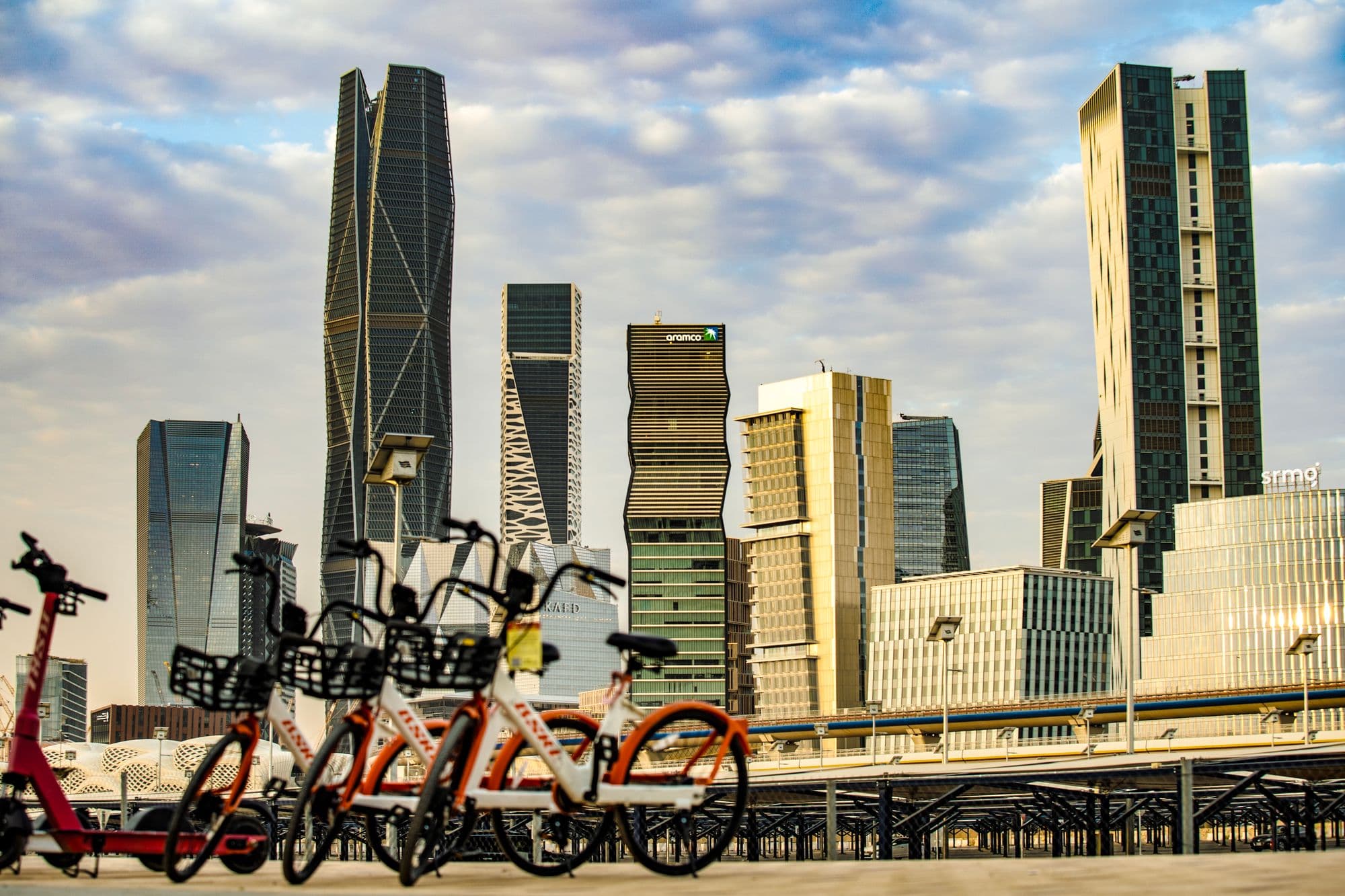
Riyadh is a working destination rather than a seasonal one. It has one civil airport, a dedicated private-aviation terminal, no slot requirement and a landing permit that has to name your handler before it is filed. Since the regional-headquarters rule took effect at the start of 2024, the reasons to be there have multiplied faster than the ramp has, and the calendar — not the runway — is what makes a date difficult.
How much does a private jet to Riyadh cost?
A private charter to Riyadh starts from around ~€12,050, depending on your departure point, the aircraft and the season.
- London Riyadh
- from ~€57,350
- Paris Riyadh
- from ~€53,650
- Geneva Riyadh
- from ~€51,400
- Dubai Riyadh
- from ~€12,050
Estimated one-way charter for the whole aircraft. The exact price depends on the aircraft and date, and is always quoted on request.
Popular routes from Riyadh
Where our clients fly from Riyadh — each corridor has its own guide to airports, flight time and cost.
Best airports for Riyadh
- RUH · King Khalid InternationalRiyadh's only civil airport; dedicated private-aviation terminal, no slot requirement
- 35 km
Which aircraft suit flights to Riyadh?
A few aircraft we regularly arrange for this route — your advisor will match the best option to your group and range.
| Aircraft | Passengers | Range | Cruise speed |
|---|---|---|---|
| Bombardier Challenger 350 | 9 | 5,900 km | ≈ 850 km/h |
| Embraer Praetor 600 | 9 | 7,400 km | ≈ 865 km/h |
| Bombardier Challenger 605 | 12 | 7,400 km | ≈ 870 km/h |
What it costs to fly privately to Riyadh
Indicatively, from about €12,050 one way from Dubai, €51,400 from Geneva, €53,650 from Paris and €57,350 from London. The gap between the Gulf row and the European ones is not a pricing quirk: 870 km against 4,300 to 4,950 km is a different class of aircraft, a different fuel bill and a different crew day. On the European corridors the cabin class sets the floor rather than the group size: carrying a full cabin over 4,300 to 4,950 km takes an aircraft from the top of the midsize class upwards, and the London leg narrows that to super-midsize and heavy — so four people and eight people pay broadly the same. On the Dubai leg the opposite applies: the distance asks nothing, and what you pay for is the larger cabin that the Gulf-based fleet happens to offer. Every trip is quoted individually; these are indicative figures, not live quotes.
Which airport a private arrival uses
There is one address. King Khalid International (RUH) is 35 km north of the city, with two parallel runways of 4,205 m and a field elevation of about 625 m. The other aerodromes near Riyadh are military, so unlike London or Dubai there is no lighter, closer alternative to trade against — the decision at this end is the handler and the arrival hour, not the airport. That will change in name rather than in geography. King Salman International is being built around the existing field and will absorb the current King Khalid terminals; construction started in September 2025 and operations are expected from 2029. Until then RUH is what you fly to, and the codes on your itinerary do not move. The airport has four passenger terminals and a Royal Terminal reserved for the royal family, government officials and state guests — private charter does not use it.
The business-aviation terminal, and the real time to a car
Private arrivals use the airport's own private-aviation terminal, opened in December 2018, a 2,617 m² building that came with a doubling of the apron beside it. It sits away from the passenger terminals, which is the point: you are not crossing the airline side of the airport at all. Saudia Private Aviation and Jet Aviation both run FBO operations at Riyadh, and Universal Aviation has announced a lounge and handling facility there. Customs and immigration are cleared inside the FBO, and the figure operators quote for that is ten to fifteen minutes. Then it is 35 km to the centre — half an hour on a clear road, longer into the northern business districts at the wrong hour, and longer still to Diriyah. Avily owns no aircraft and no terminals; the handler who meets you is named on your confirmation before you travel.
The weeks that set the price
Four things move a Riyadh date. The Future Investment Initiative takes the last week of October — the tenth edition runs 26 to 29 October 2026 at the King Abdulaziz International Conference Centre — and it moves aircraft, handling and hotel rooms in one block. Riyadh Season runs from October into the spring; the 2025–26 edition opened on 10 October and ran to early May, and the opening weekend is the single heaviest of the entertainment calendar. Ramadan compresses the working day and pushes flying into the evening rather than removing it, and the weeks around Eid are among the busiest of the year. The fourth is administrative rather than commercial: government offices work Sunday to Thursday and close for public holidays including Saudi National Day on 23 September, which is a permit problem, not a traffic one. Outside those, three weeks of notice is comfortable.
Slots, curfews and where the aircraft sleeps
Saudi Arabia does not normally require airport slots or prior permission at its main airports, so there is no slot to win at Riyadh — a real difference from Geneva, which is fully coordinated, or Dubai International, where general aviation competes for slots with airline traffic. What replaces it is the permit. Every non-scheduled flight needs a GACA landing permit, published at three business days, and the application has to name your ground handler in Saudi Arabia. Handling at a large Saudi airport can be arranged on as little as three hours' notice; smaller fields want 24, and the smaller ones also carry operating curfews that will not be extended. Riyadh has no equivalent of Dubai International's 24-hour ground-time rule, so an aircraft staying with you for several days is usually easier to park here than there. If it does not stay, it repositions — and that leg is in the quote before you book.
Ground, luggage and animals
Two rules catch people, and both are settled before departure rather than at the aircraft. Alcohol may not be imported into Saudi Arabia at all: whatever is aboard is locked and sealed by customs on arrival, and operator guidance puts the fine for failing to secure it before inspectors board at up to USD 20,000. Passports need at least six months of validity, and copies of the general declaration are required at each arrival and departure. Animals are the harder one. Saudi Arabia requires an import permit from the Ministry of Environment, Water and Agriculture, applied for through its Anaam platform at least 14 days before entry and valid for 30 days; the published position is that a visitor on a tourist visa may not import a pet at all, and that the ministry considers hunting, guard and guide dogs rather than pets in general. Ask us before you book, not after.
What the city is for
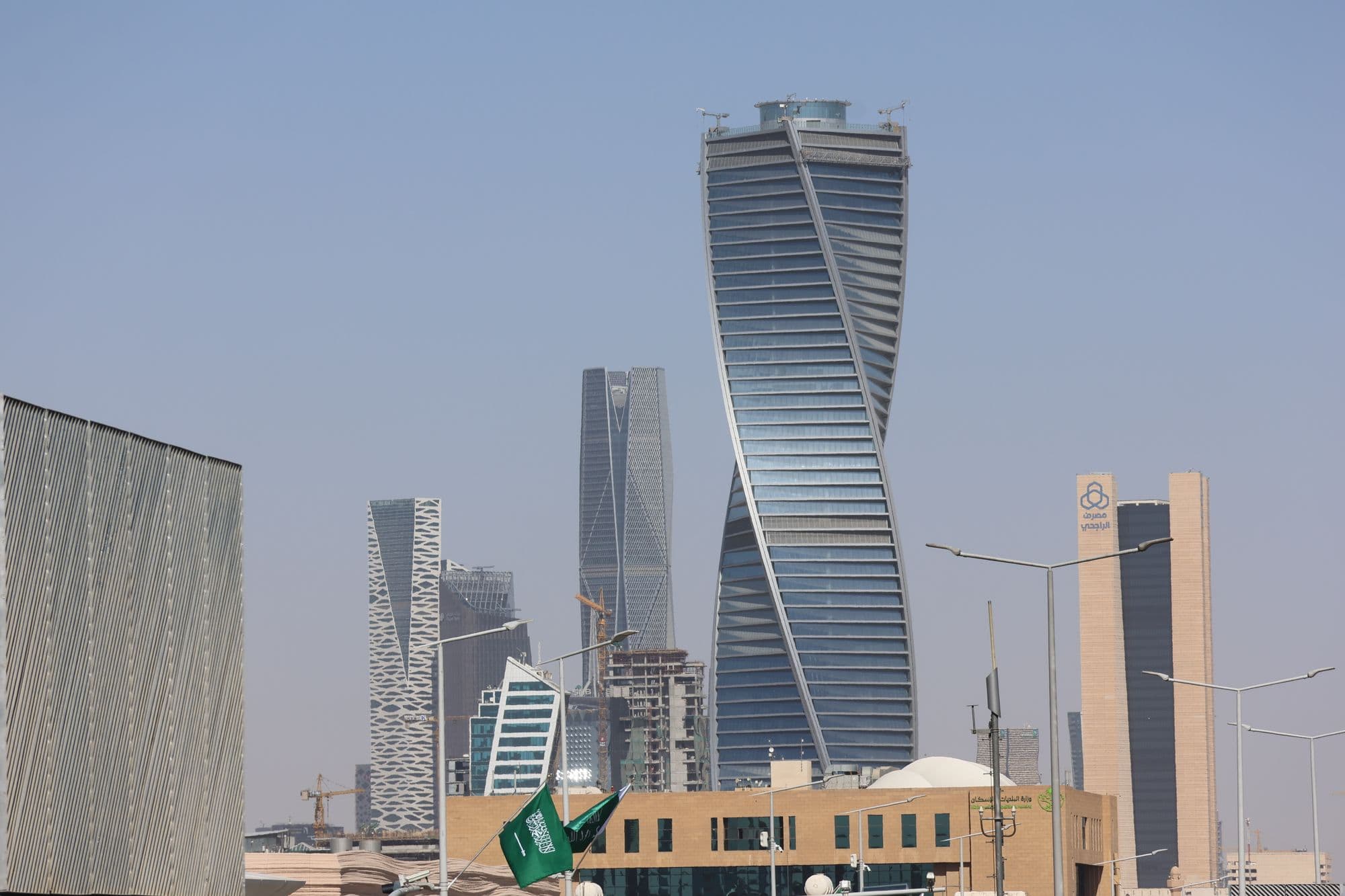
Riyadh is where Saudi decisions are made rather than where they are spent. The regional-headquarters rule that took effect on 1 January 2024 made the point concrete: central-government bodies generally do not award contracts to companies without a Saudi regional headquarters licence, and by early 2026 roughly 700 multinationals had established one. That is the traffic behind the European corridors — boards, delegations and technical teams with a meeting at one end and a flight home at the other. Around that sits everything the sovereign fund is building: the financial district in the north of the city, Diriyah on its western edge, and the entertainment season that runs from October. Summer is not the season for any of it — July averages in the mid-forties and has reached 47 °C — which is why the leisure half of the calendar lives in the cooler months and the flying in July lives at dawn.
Frequently asked questions
- Which airport serves Riyadh?
- King Khalid International (RUH), 35 km north of the city, with two parallel 4,205 m runways. It is Riyadh's only civil airport — the other fields nearby are military. Private arrivals use its dedicated private-aviation terminal, opened in 2018, away from the four passenger terminals.
- How much is a private jet to Riyadh?
- Indicatively from about €12,050 one way from Dubai, €51,400 from Geneva, €53,650 from Paris and €57,350 from London. The Gulf leg is 870 km and the European ones 4,300 to 4,950 km, which is a different aircraft class and a different crew day. Every trip is quoted individually.
- Do I need a slot or a permit to fly privately to Riyadh?
- A permit, not a slot. Saudi Arabia does not normally require airport slots or prior permission at its main airports, but every non-scheduled flight needs a GACA landing permit — published at three business days — and the application must name your Saudi ground handler.
- Can I bring alcohol or a dog into Saudi Arabia?
- Alcohol, no: import is prohibited and customs seals whatever is aboard on arrival. Animals need an import permit from the Ministry of Environment, Water and Agriculture through its Anaam platform, applied for at least 14 days ahead, and a visitor on a tourist visa is not permitted to import a pet.
- When is the most difficult time to fly to Riyadh?
- The last week of October, when the Future Investment Initiative fills the city — 26 to 29 October in 2026 — and the opening of Riyadh Season in mid-October. Eid weeks are among the busiest of the year. Outside those, three weeks of notice is comfortable.
From the journal
Middle East