Southern Europe
Private jet charter to Larnaca
Cyprus's main gateway and a crossroads of the eastern Mediterranean.
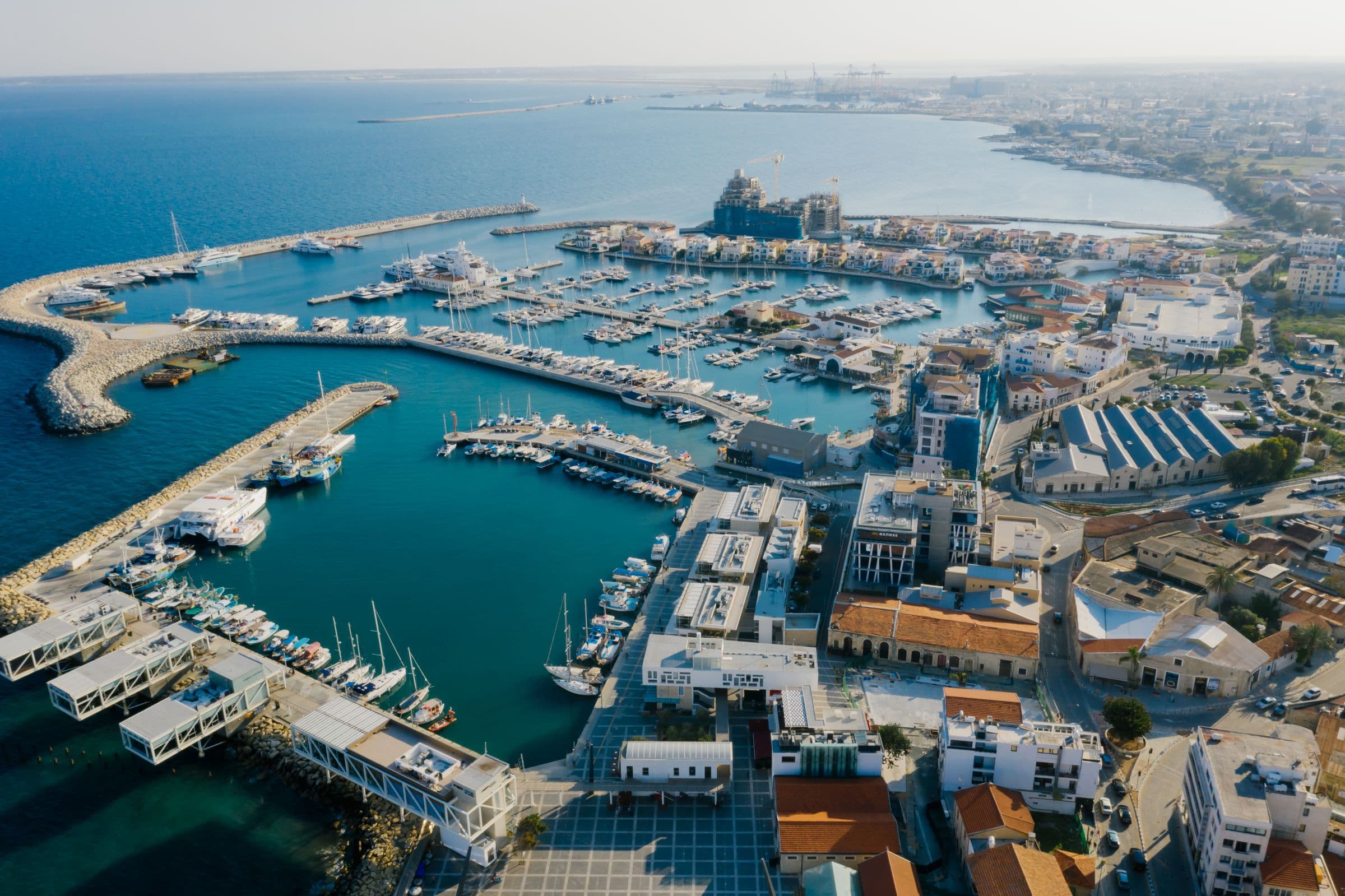
Larnaca is the principal gateway to Cyprus, with strong year-round business-aviation traffic and a position at the crossroads of Europe, the Middle East and the eastern Mediterranean. Its airport sits minutes from the coast and connects easily to Limassol's business district and the island's resorts.
How much does a private jet to Larnaca cost?
A private charter to Larnaca starts from around ~€11,550, depending on your departure point, the aircraft and the season.
- London Larnaca
- from ~€22,000
- Dubai Larnaca
- from ~€23,900
- Athens Larnaca
- from ~€11,550
- Tel Aviv Larnaca
- from ~€12,250
Estimated one-way charter for the whole aircraft. The exact price depends on the aircraft and date, and is always quoted on request.
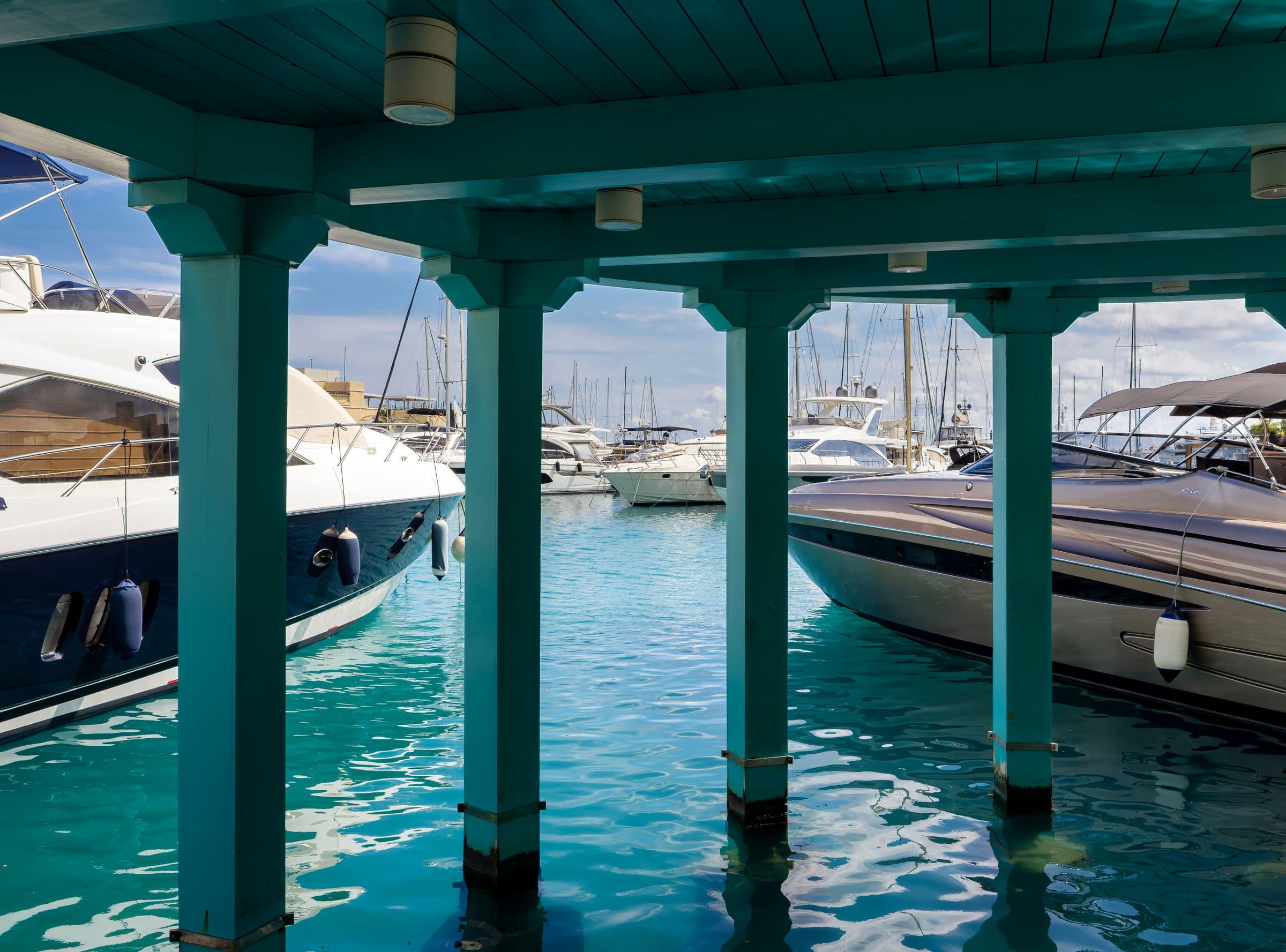
Best airports for Larnaca
- LCA · Larnaca InternationalCyprus's main gateway; business-aviation handling
- 5 km
Which aircraft suit flights to Larnaca?
A few aircraft we regularly arrange for this route — your advisor will match the best option to your group and range.
| Aircraft | Passengers | Range | Cruise speed |
|---|---|---|---|
| Embraer Praetor 600 | 9 | 7,400 km | ≈ 865 km/h |
| Bombardier Challenger 350 | 9 | 5,900 km | ≈ 850 km/h |
| Embraer Legacy 650 | 13 | 7,200 km | ≈ 850 km/h |
Getting to Larnaca and around Cyprus
Larnaca International (LCA) is Cyprus's main airport, just south of the city and minutes from the sea, with business-aviation handling. From there Limassol is about a 45-minute drive, and the whole island — Nicosia, Paphos and the Troodos mountains — is within easy reach by car or helicopter.
Which aircraft fly to Larnaca?
From London and northern Europe, Larnaca is a longer leg of roughly four to four and a half hours, best suited to a super-midsize or heavy jet such as a Praetor 600, Challenger 350 or Legacy 650. From Dubai or the eastern Mediterranean it is a much shorter hop that a midsize jet covers comfortably.
When to visit
Cyprus enjoys one of the longest seasons in the Mediterranean, warm from spring well into autumn, with summer the peak for the coast. Its steady business traffic — much of it linked to Limassol — keeps the route active year-round, not only in the holiday months.
Where a private arrival lands at Larnaca
Business aviation uses the island's original terminal — the building that served Cyprus from 1975 until the current passenger terminal and its sixteen airbridges opened in November 2009. It was kept, refitted and now runs as the executive terminal, on the apron the airport uses for VIP, cargo and stored aircraft rather than alongside the airline traffic. Skylink Services operate it, the only FBO on the island, staffed around the clock, and the same company handles Paphos. The ground time is short without being zero. The car comes to the aircraft, but every arrival clears passport control, which is a consequence of Cyprus sitting outside Schengen rather than anything the airport does. Ten to fifteen minutes from wheels-down to moving is realistic. Avily owns no aircraft and no terminals; the handler is named on your confirmation.
The season, and the aircraft that sets the price
Cyprus has the longest warm season in the Mediterranean and the demand curve follows it rather than a single peak. July and August are the crush on the coast at Ayia Napa and Protaras. Orthodox Easter moves each year and concentrates a week of island-wide travel wherever it lands. And Limassol's shipping, fund and technology businesses keep January and February busier here than almost anywhere else in the eastern Mediterranean. April, May and October are the weeks that book easily. What usually sets the price is the cabin rather than the date. London to Larnaca is 3,260 km and about 4h 30m, and that distance is where several types stop working with every seat sold: a Citation XLS+ carries it with four aboard and becomes a fuel stop with eight. A Challenger 350, Praetor 600, Citation Latitude or Legacy 650 flies it full. From around €22,000 one way, and three to four weeks' notice is enough outside August.
Slots, duty hours and the border
Larnaca is schedules-facilitated rather than fully coordinated — Level 2 — so there is no slot to win. In July and August the constraint is ramp space and handling capacity, which are booked rather than allocated, and an aircraft that cannot stay repositions to Paphos, about an hour and a half away by road and handled by the same company. The airport runs 24 hours on a single 3,000 m runway with no curfew, which matters on the way home: a late departure that Farnborough or London City would refuse is ordinary here. Two things catch people out. The first is crew duty — London to Larnaca and back is nine hours of flying, past what a two-pilot crew may legally fly in a day, so a same-day return means a night stop or a second crew, and both are in the quote. The second is the border. Cyprus is in the EU but not in Schengen, so passport control applies to every arrival, including one from Athens or Milan. A single-entry Schengen visa does not admit you; a double or multiple-entry one generally does, and days spent in Cyprus do not count against the Schengen 90. The European Commission signed off on Cyprus's readiness in July 2026; what remains is a unanimous vote of the Council, expected between late 2026 and early 2027. Until it happens, plan on the border being there.
Ground, luggage and animals
The car meets the aircraft and the motorway does the rest: Limassol in about 45 minutes, Nicosia and Ayia Napa in roughly the same, Paphos in an hour and a half. That last figure is the one to act on — for a stay on the western coast, fly into Paphos itself and save the drive. Helicopter transfer exists on the island but is not the default it is on the Riviera, and a tender can meet you at Limassol Marina or Ayia Napa Marina if the yacht is at anchor. On a sector of this length a full cabin already costs range, so luggage weight is a planning number rather than a formality — send the list with the enquiry, golf bags and dive gear included. Animals arriving privately are seen by the airport's veterinary service, which expects notice before the flight; 48 hours is the figure usually quoted. The microchip, the rabies vaccination and its waiting period apply, the paperwork depends on whether you are leaving an EU country, and whether the animal travels in the cabin is the operator's decision.
Frequently asked questions
- Which airport serves Larnaca?
- Larnaca International (LCA), 5 km from the city — Cyprus's main gateway, with business-aviation handling and a single 3,000 m runway.
- How much is a private jet to Larnaca?
- Indicatively from about €11,550 one way from Athens, €12,250 from Tel Aviv, €22,000 from London and €23,900 from Dubai. Dubai costs more than London despite being 800 km closer — the charter fleet is European, so a Gulf departure carries the positioning. Every trip is quoted individually.
- Is there a curfew at Larnaca?
- No. The airport runs 24 hours with no curfew, and it is schedules-facilitated rather than fully coordinated — Level 2 — so there is no slot to win. A late departure that Farnborough or London City would refuse is ordinary here.
- Can I fly London–Larnaca and back in a day?
- Not on one crew. The round trip is nine hours of flying, past what a two-pilot crew may legally fly in a day, so a same-day return means a night stop or a second crew — and both are in the quote.
From the journal
Southern Europe